Tilda
Designing against the female mental health crisis
Situation
Women who are in their fifties and beyond today are disproportionately affected by depression, anxiety and associated mental health challenges. They are part of a generation in which voicing vulnerabilities is frowned upon and seeking help stigmatized. Women who, for most of their lives, have been busy juggling care work and careers, face challenges in their relationships and questions of purpose and belonging when children leave the house.
Task
Bauer Publishing is amongst the largest media corporations in Europe. With their strong presence in the tabloid and yellow-press print market, Bauer has unique access to the female 50+ target group. In a multidisciplinary team at BCGDV, we set out to gain a deeper understanding of what moves women in this phase of their lives. Our task was to broaden our understanding of how to better serve their emotional needs and make best use of their trust in Bauer’s existing portfolio as a core asset.

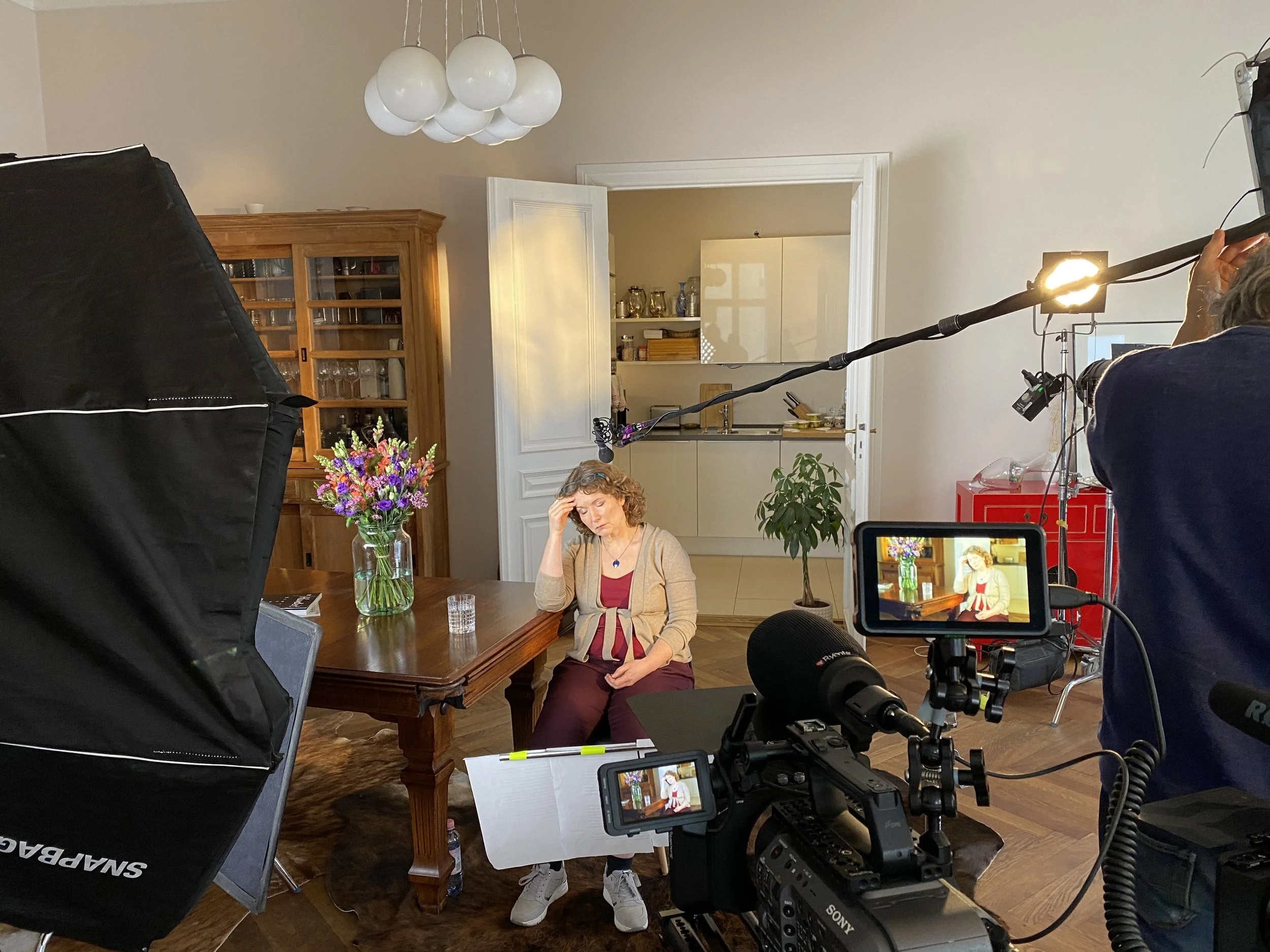
Shooting video content for the self-help DiGa application

Tilda was pioneering in the digital mental health market
Action
Based on our primary research, we set out to validate the hypothesis that women in their sixties are gravely overlooked by the then nascent online self-help and therapy movement. Our riskiest assumption was that personas which we identified to have low tech literacy and were not accustomed to communicate in remote presence setting were willing to open up emotionally towards themselves and others.
As a member of the venture team, I was in charge of prototyping an experience that was part self-guided assessment and reflection through native mobile apps and part group interactions led by a mental health professional.
My responsibilities included managing the testing, feedback and product iteration cycle with our cohort of twenty closed beta participants. Meanwhile, I helped in the content creation workstream by auditioning and negotiating acting talent, managing on location video shoots and ensuring delivery to the therapy product.
Result
The tests far exceeded expectations: participants were happy to join the programme, showed extraordinarily low churn and reported noticeable change in their day to day well-being. I was humbled by the experience of witnessing sessions that deeply moved our users and clearly served an urgent need.
As a result, Bauer moved “Tilda” out of stealth and began hiring an external venture team to prepare a nationwide roll-out. However, the publisher lost its nerve soon after launch when user adoption rates did not meet expectations and cut funding one year after going live. Personally, this decision serves as a stark reminder for where corporate venturing falls short: in the end, the corporation was not able to accept the risk and required patience associated with building, running and funding a startup in a pioneering market.